FurtherAI Available in Microsoft Marketplace
Introducing Connectors



2026 Insurance AI Buying Guide: Horizontal Tools or Dedicated Platforms

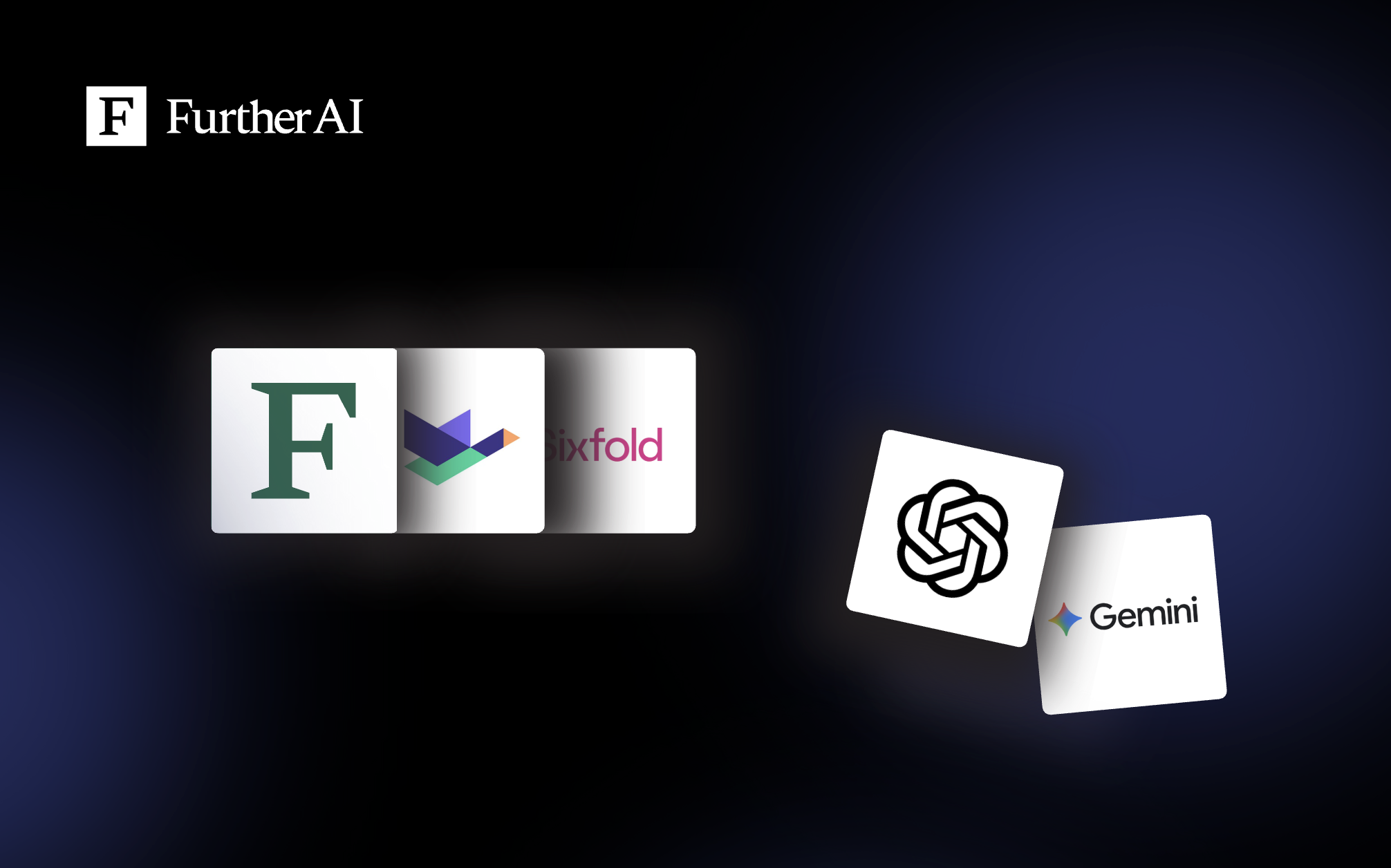
If you're a carrier, MGA, reinsurer, or broker weighing your first serious AI investment, the decision usually comes down to one question: do you buy a broad, horizontal AI tool that works across any industry, or a dedicated insurance platform built for policy, claims, and underwriting work? In this guide, we break down the tradeoffs, ROI, and compliance realities, so you can match the choice to your data, your workflows, and your regulators.
We’ve built a dedicated insurance platform, so we obviously have a point of view. But we've also tried to keep the evidence below sourced to independent research you can fact-check yourself.
Key takeaways
- Horizontal AI tools (ChatGPT, Microsoft Copilot, Google Gemini) are general-purpose and fast to pilot, but they need heavy customization to handle insurance logic, compliance, and core-system integration.
- Dedicated insurance platforms ship with prebuilt policy, claims, and underwriting workflows plus audit trails, so they reach insurance-grade results faster.
- Independent research favors buying over building: MIT found that 95% of enterprise generative AI pilots deliver zero measurable return, and that AI projects built with specialized vendors succeed about 67% of the time, roughly three times the success rate of internal builds.
- A hybrid model often wins: a dedicated platform for the compliance-critical core, horizontal tools for general productivity.
- FurtherAI customers report real outcomes on dedicated infrastructure, including 30x faster quote generation and 67% fewer policy-comparison hours.
Should you buy a horizontal AI tool or a dedicated insurance platform?
For automating regulated, document-heavy insurance workflows, a dedicated insurance platform is usually the better buy. It arrives with insurance data models, compliance guardrails, and core-system integrations already in place, which shortens time-to-value and lowers the hidden cost of building domain logic yourself. Horizontal tools still earn their place for general productivity, drafting, and rapid experimentation, which is why many teams run both.
The stakes are high because the prize is large. McKinsey estimates generative AI could unlock $50 billion to $70 billion in value across the insurance industry, with productivity gains of 10% to 20% and as much as a 40% to 50% impact on a single process. Capturing that value depends heavily on which path you choose.
Understanding horizontal AI platforms
A horizontal AI platform is a general-purpose system that centralizes large language model (LLM) access, orchestration, data pipelines, and deployment tools so teams across any department or industry can build on the same infrastructure. ChatGPT, Microsoft Copilot, and Google Gemini are the most familiar examples.
Their strengths are real:
- Broad applicability. One tool supports marketing, HR, engineering, and operations.
- Fast, low-friction pilots. Teams can experiment in days without procurement-heavy deployments.
- Flexibility. They handle open-ended tasks like drafting, summarizing, and search well.
The limitations show up the moment insurance specificity matters. Horizontal tools ship without prebuilt insurance data models, policy logic, or compliance guardrails, so you supply that depth through custom engineering. That's where projects stall. Gartner expects at least 30% of generative AI projects to be abandoned after proof of concept, often because of inadequate AI-ready data and unclear business value.
Understanding dedicated insurance AI platforms
A dedicated insurance AI platform provides modules pre-trained on policy, claims, and underwriting data, layered with built-in compliance guardrails and integrations that accelerate insurance workflow automation. Instead of teaching a general model what an ACORD form, a statement of values, or a loss run is, the platform already knows.
The advantages compound in regulated work:
- Insurance-native data models. Submission intake, policy comparison, and audits work out of the box.
- Built-in auditability. Every extraction and decision is logged for regulators, which we'll return to below.
- Faster insurance-grade results. Prebuilt workflows mean fewer months spent building domain logic.
The tradeoff is a higher upfront commitment to a specialized vendor and a narrower feature set outside insurance. For core operations, that focus is the point.
Comparing the core tradeoff: Breadth versus depth
The cleanest way to frame the vertical vs horizontal SaaS decision is breadth against depth. Horizontal platforms cover a wide range of general business use cases shallowly. Dedicated platforms go deep on insurance-specific functionality. The table below lays out how the two approaches compare on the dimensions buyers ask about most.
Speed to value and total cost of ownership
Horizontal tools look cheaper because the sticker price is low and pilots start fast. The true total cost of ownership (TCO) lands later, when you account for the engineers, data work, and compliance scaffolding needed to make a general model insurance-ready.
The independent evidence on build-versus-buy is striking. MIT's 2025 research found that 95% of enterprise generative AI pilots produce zero measurable return, and that buying from specialized vendors succeeds about 67% of the time, roughly three times the success rate of internal builds. For most insurers, the dedicated path is the lower-risk path to ROI, not just the faster one.
FurtherAI customers see their ROI in measurable terms. A carrier using FurtherAI for complex property SOV intake reported 646% ROI, an insurer revamping policy management saw 400% ROI within months, and a large MGA reached 30x faster submissions with 200%+ efficiency gains.
Vendor risk and the value of a specialized moat
A vendor's "moat" is the specialization, compliance depth, and workflow integration that make a platform hard to replace and worth staying with. In software broadly, vertical platforms tend to hold customers longer because switching costs are higher and the workflow integration runs deeper, a pattern Tidemark documents in its 2025 vertical SaaS benchmark research.
For insurance teams, that translates into lower vendor churn and a partner whose roadmap is tied to your industry's regulatory and operational reality. Horizontal vendors compete for every industry at once; a specialist's incentives are aligned with yours. FurtherAI was built by former underwriters and insurance product leaders, and the platform processes roughly $30 billion in premiums across 20+ lines of business in nearly 50 states.
Evaluating integration and compliance capabilities
Compliance is where the horizontal-versus-dedicated gap is widest, and it's getting wider as regulation tightens. The NAIC Model Bulletin on the Use of AI Systems by Insurers, now adopted by more than half of U.S. states, requires insurers to maintain a written AI program with documented governance, model validation, and testing records. In Europe, the EU AI Act classifies life and health underwriting and pricing AI as high-risk, demanding technical documentation, record-keeping, human oversight, and explainable decisions.
Auditability is the ability of a platform to generate verifiable records of every automated decision. When you evaluate platforms, check for:
- Native integration with policy and claims systems through secure APIs.
- Compliance guardrails, including audit trails, SOC 2 and ISO 27001 readiness, and privacy controls.
- Domain-specific documentation and automatic evidence generation for regulators.
FurtherAI logs every extraction, transformation, and decision automatically and aligns with SOC 2, CCPA, GDPR, and ISO 27001. A reinsurer using FurtherAI for underwriting audits cut review time 45%, from 200 hours to 110 hours per MGA, while improving compliance. To learn more about how AI improves underwriting specifically, check out our dedicated guide on underwriting AI.
Impact on workflow automation and operational efficiency
Workflow automation means using AI to process tasks such as document intake, risk scoring, and claims triage with little or no manual effort. The efficiency upside is well documented: Deloitte estimates AI-driven fraud analytics alone could save P&C insurers from $80 billion to as much as $160 billion by 2032, and reports that agentic AI can cut underwriting and claims decision cycle times 30% to 50%.
On dedicated insurance infrastructure, those gains become operational. FurtherAI customers report 30x faster quote generation, 67% fewer policy-comparison hours, and 85% fewer underwriting audit revisions. One claims team hit 90% automation of intake, $360,000 in savings, and 10x faster processing.
Role-specific and hybrid approaches
You don't have to choose one path for the whole organization. A practical hybrid model uses a dedicated insurance platform for the compliance-critical core (submissions, policy checks, claims, audits) and layers horizontal tools on top for general productivity and rapid prototyping. Some teams also adopt role-focused tools, like horizontal AI tuned into a claims-adjuster workbench, alongside their core platform.
Hybrid makes sense when different teams have genuinely different needs: underwriting and claims need insurance depth and auditability, while marketing, HR, and engineering are well served by general-purpose tools.
Making the right choice: A buyer's framework
Work through these questions with your buying team to land on the right fit:
- How much proprietary insurance data and logic does the workflow need? High specificity favors a dedicated platform.
- What's your regulatory and audit exposure? High exposure favors built-in compliance over DIY guardrails.
- How fast do you need insurance-grade results? Tight timelines favor prebuilt workflows.
- Do you have engineering capacity to build and maintain domain logic? Limited capacity favors buying from a specialist.
- Are needs uniform or varied across teams? Varied needs favor a hybrid model.
If regulatory risk and data sensitivity are high, lean dedicated. If the work is generic or research-focused, a horizontal tool may suffice. When teams diverge, go hybrid.
See it in your own workflows
If you're comparing options for underwriting, claims, or policy work, the fastest way to judge fit is on your own documents. Book a FurtherAI demo to see how a dedicated insurance platform handles your real submissions and audits.
REFERENCES
Deloitte. "2026 Global Insurance Outlook." Deloitte Insights. deloitte.com
EU Artificial Intelligence Act. "Annex III: High-Risk AI Systems." artificialintelligenceact.eu
Fortune. "MIT Report: 95% of Generative AI Pilots at Companies Are Failing." fortune.com
FurtherAI. "AI Platform Powering $50B+ in Written Premium." furtherai.com
FurtherAI. "Customer Stories." furtherai.com
Gartner. "Why Half of GenAI Projects Fail." gartner.com
McKinsey & Company. "AI in Insurance: Understanding the Implications for Investors." mckinsey.com
McKinsey & Company. "The Potential of Gen AI in Insurance." mckinsey.com
MIT NANDA. "The GenAI Divide: State of AI in Business 2025." mlq.ai
National Association of Insurance Commissioners. "Model Bulletin on the Use of AI Systems by Insurers." naic.org
Tidemark. "2025 Vertical & SMB SaaS Benchmark Report." tidemarkcap.com
DISCLAIMER
This article is for general informational purposes only and does not constitute legal, regulatory, compliance, underwriting, or other professional advice. The content reflects information available as of the date of publication, and FurtherAI undertakes no obligation to update it as laws, regulations, or AI technologies evolve.
Recent posts
Ready to go further and
transform your insurance ops?
Reclaim your time for strategic work and let our AI Assistant handle the busywork. Schedule a demo to see how you can achieve more, faster.




.svg)