FurtherAI Available in Microsoft Marketplace
Introducing Connectors



From Chatbots to Agentic Workflows in One Year: The Real State of AI in Insurance

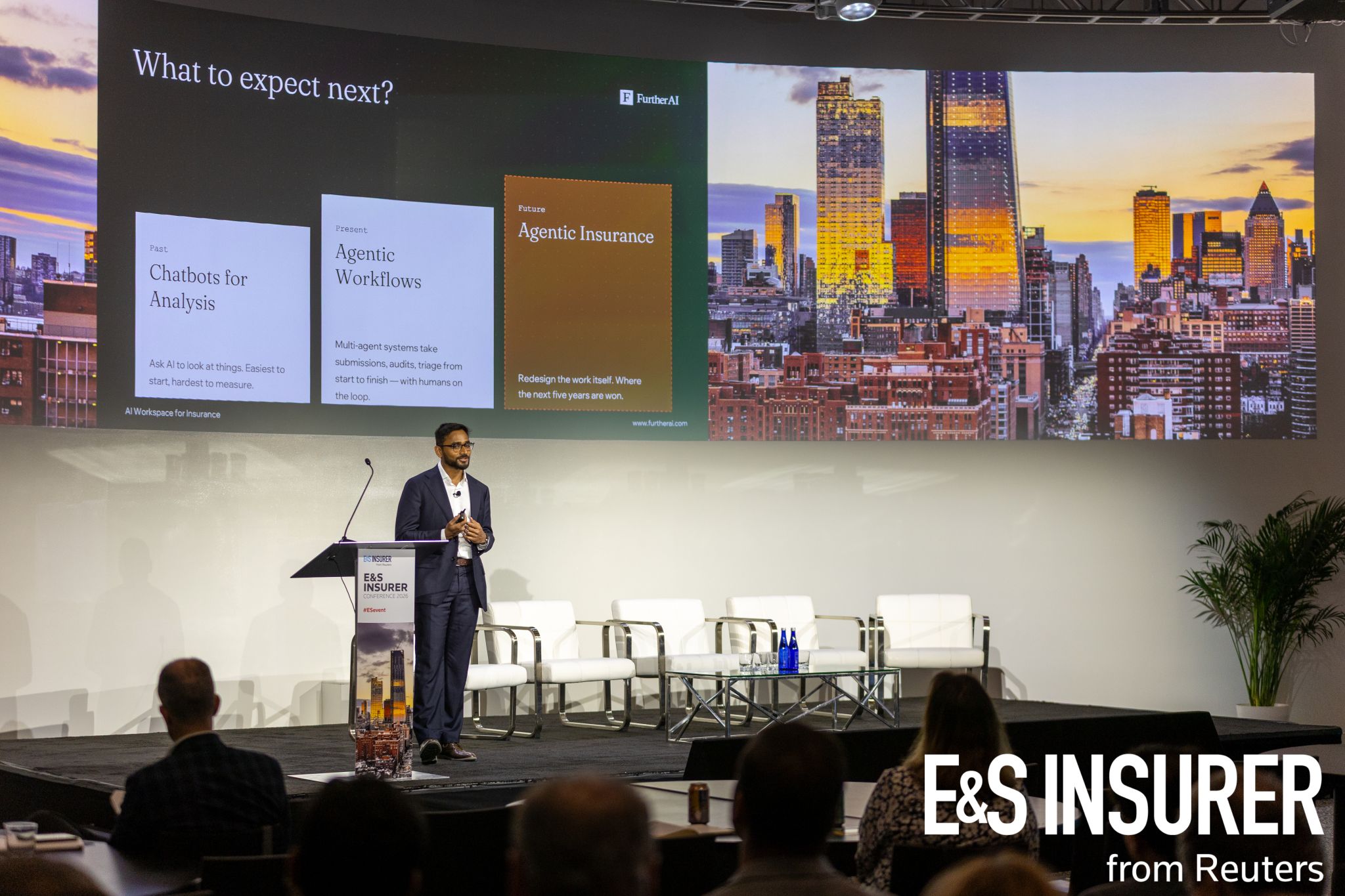
Last week, I had the opportunity to deliver the keynote at the annual conference hosted by The Insurer. The topic was AI and the progress our industry has actually made.
And it's fascinating to watch: the most interesting signal wasn't any specific product or breakthrough, but the conversation around AI in insurance itself — how fast, and how much, it's been changing.
In just one year, we went from talking about chatbots that help with analysis to talking about agentic workflows running end to end. And, in my opinion, the shift in framing tells you more about where the industry is headed than any vendor demo could.
There are three themes that came through clearly, and I’d love to share them here.
The slides insurance leaders are asking about. Get the full deck.
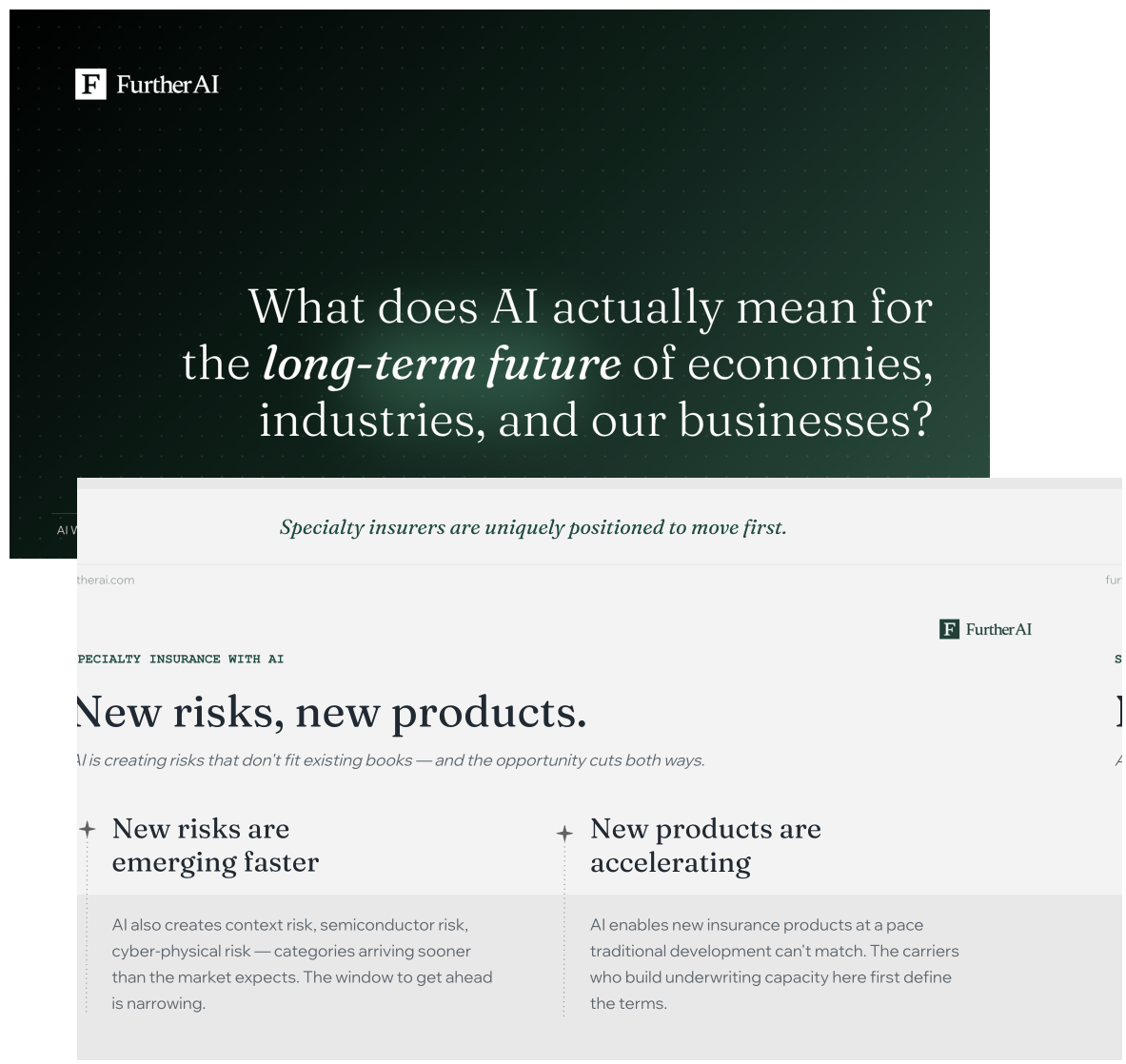
The model of work is shifting
For decades, the arrangement was simple: systems stored the data, and humans did the work. Today, we can see it evolving. Systems still store the data, but increasingly AI does the work, and humans manage the agents doing it.
Of course, it's a profound change to live through. The jobs aren’t disappearing, but they are moving up a level.
The most valuable people in an insurance organization are no longer those processing the most policies by hand — they're the ones who can direct, supervise, and improve a fleet of agents doing that processing for them.
Workflows that weren't possible before are now possible
This is the part that excites me most, because it isn't about doing old work faster: it's more about doing work that simply couldn't be done.
Let’s take compliance, for example. You used to audit a sample of policies once a year, and sampling was a concession to human bandwidth. No team could realistically review everything, so you reviewed enough to feel reasonably covered.
With agentic AI in insurance, that constraint falls away. Now you can audit every policy being underwritten, and do so in real time, as it happens. The exception gets caught the day it's written, instead of eleven months later in a retrospective review.
Agents don't have to live in silos
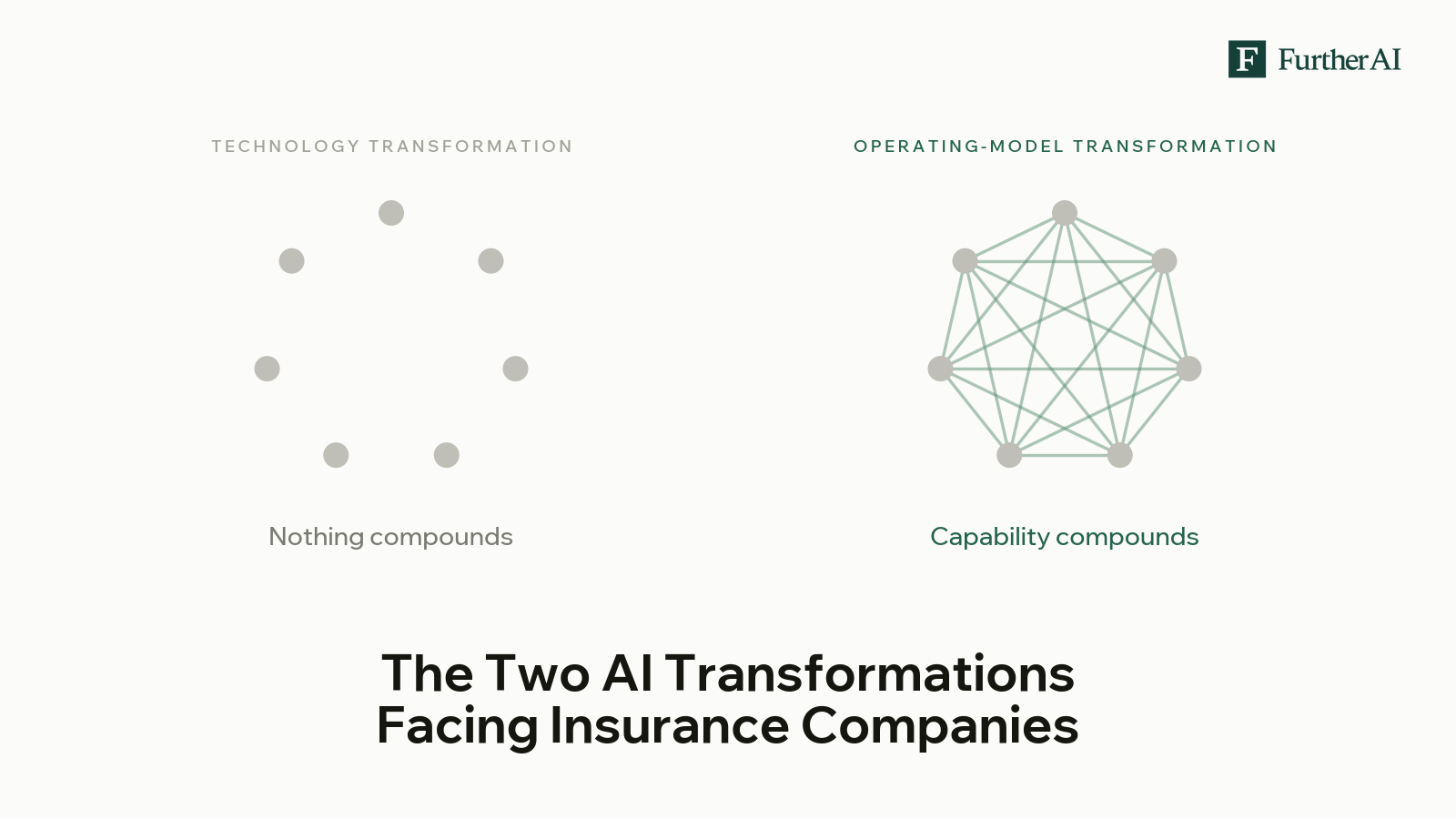
Previous-generation software was built around silos: underwriting had its system, claims had another, and policy administration had a third. Each was optimized for its own corner, and stitching them together was somebody's full-time job (usually done with spreadsheets and email).
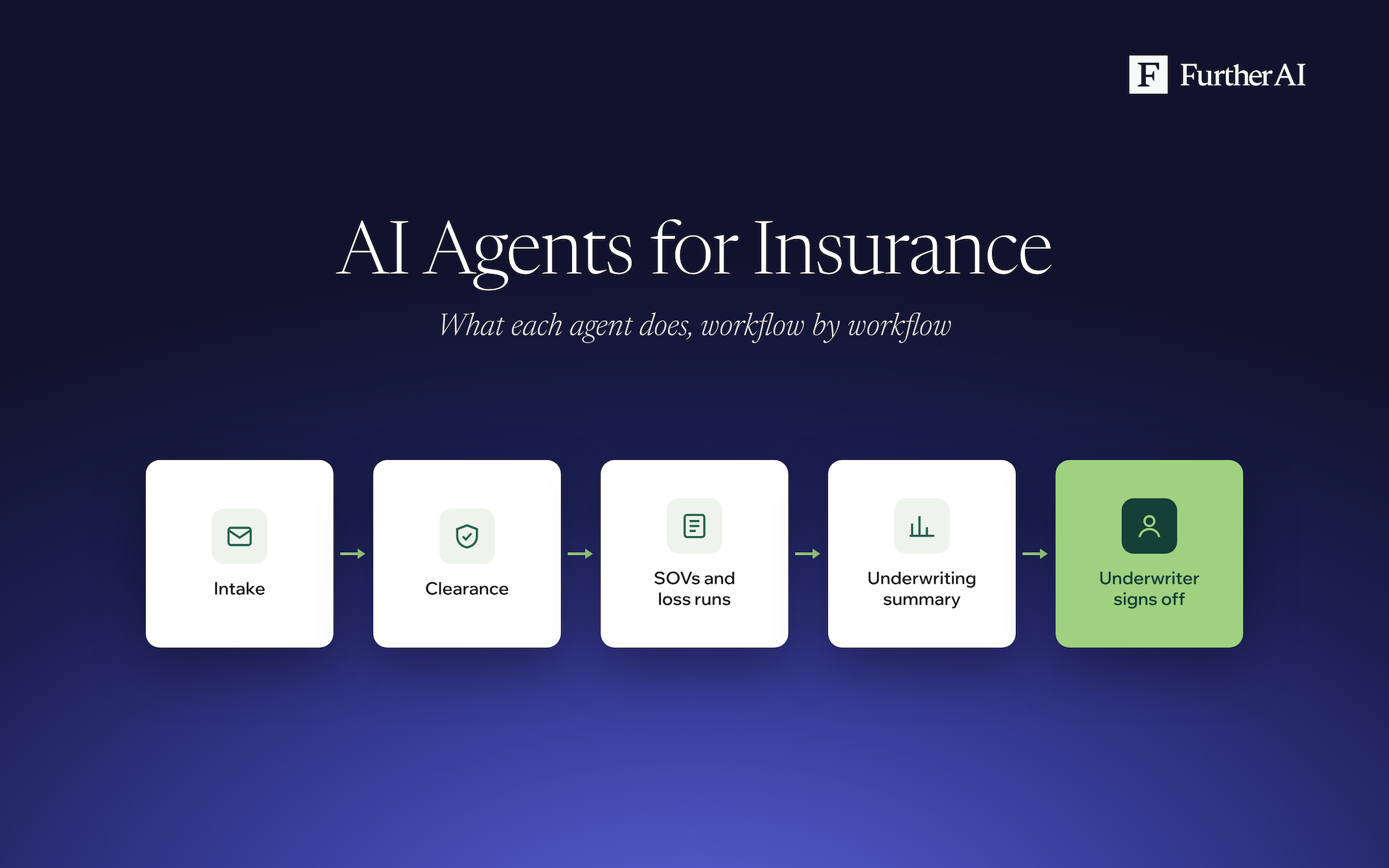
Agentic workflows don't have to operate in such silos.A system of agents can orchestrate processes that cut across the entire organization, pulling underwriting, claims, and policy data together to reach a single, coordinated decision.
The payoff is real
None of this is theoretical. WTW's 2026 survey found that P&C insurers leaning heavily into advanced analytics and AI achieved combined ratios six points lower and premium growth three points higher than their peers.
There's a lot to unpack in those numbers, but the overall theme from the industry was consistent:
“The risk of moving slow is now higher than the risk of moving fast.” — Aman Gour, Co-Founder and CEO at FurtherAI
So what's next?
If last year it was all chatbots, and this year it is all agentic workflows, it’s just natural to wonder what's next for the insurance industry.
I think it's AI standing for Agentic Insurance — an industry where coordinated systems of agents don't sit on top of the work as a nice-to-have, but become the way the work itself gets done.
Recent posts
.png)
Ready to go further and
transform your insurance ops?
Reclaim your time for strategic work and let our AI Assistant handle the busywork. Schedule a demo to see how you can achieve more, faster.




.svg)