FurtherAI Available in Microsoft Marketplace
Introducing Connectors



What 40+ Insurance Leaders Told Us Over Dinner

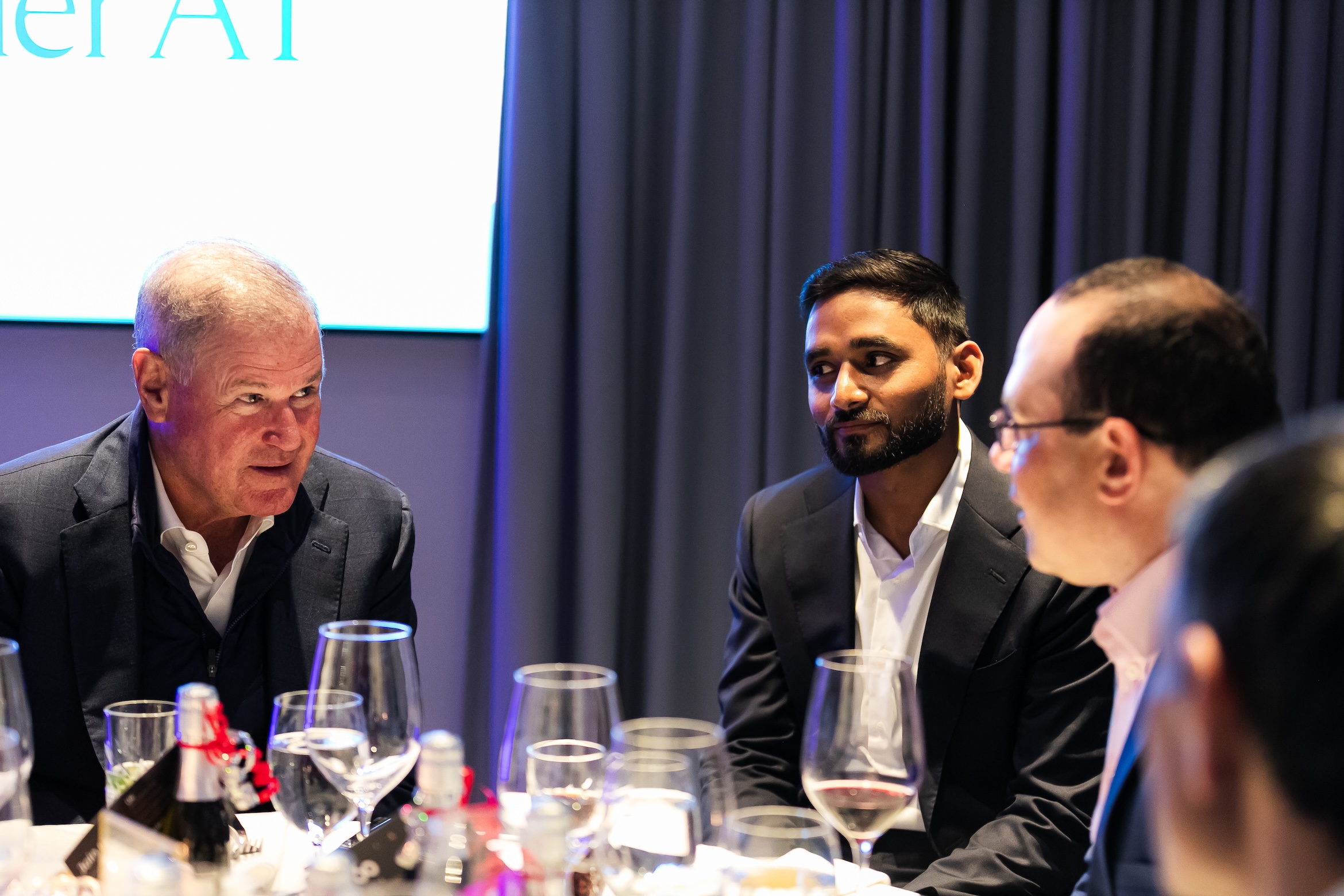
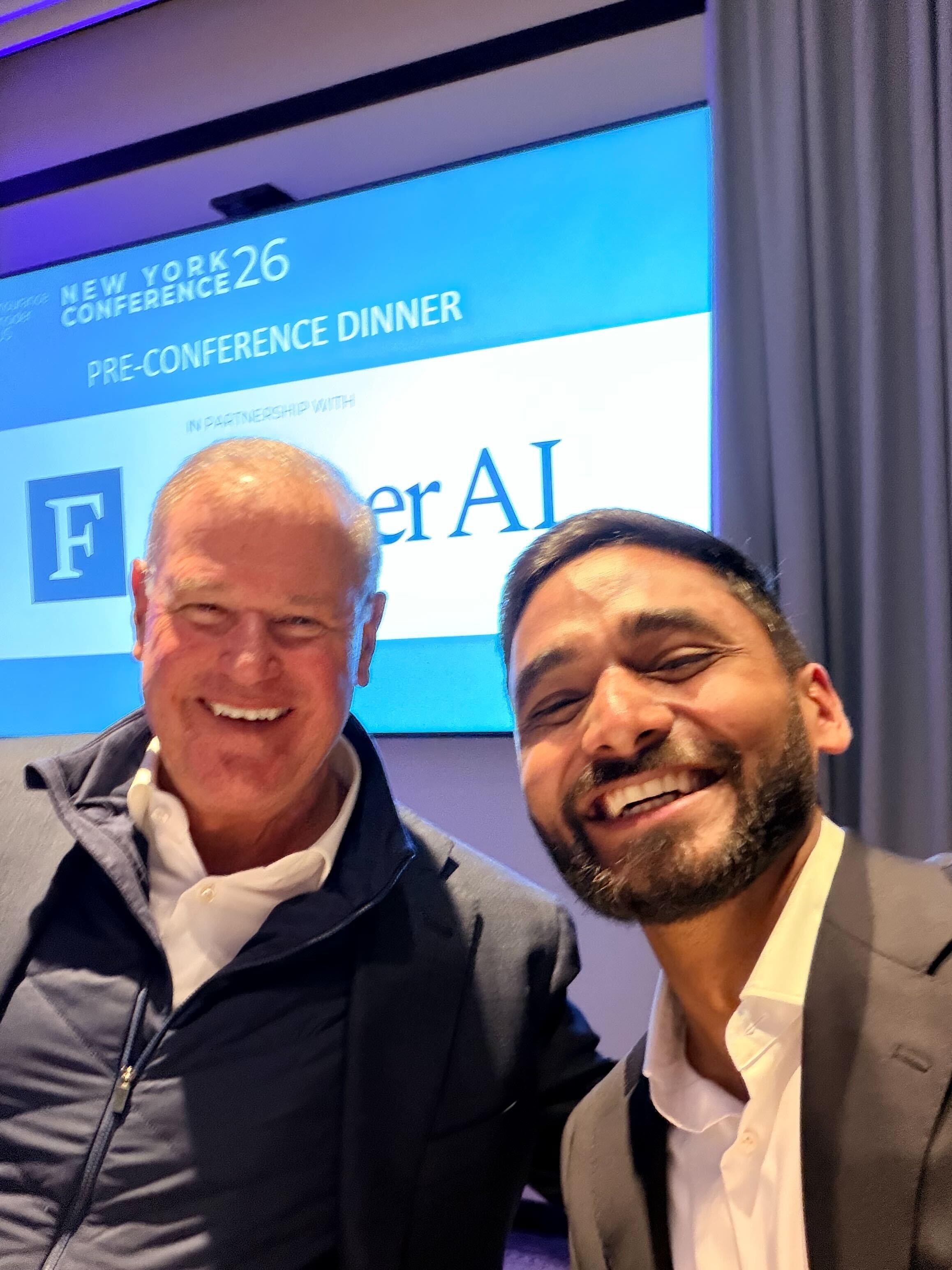
Last week, FurtherAI co-hosted a dinner with Insurance Insider for 40+ leaders from across commercial insurance. Carrier CEOs, MGA founders, reinsurance heads, and brokers all set around the table to have a conversation, no slides involved.
Since people in the room knew the industry better than anybody, and most of them have been operating at the top of it for longer than FurtherAI has existed, I felt nervous walking in.
So I opened the evening by saying exactly that. And because having presentation jitters is a universal experience most people in the room were likely familiar with, everybody chuckled. Things got much easier from there.
What followed was three hours of the most direct conversation I've had about where this industry is headed. We discussed more than this article can accommodate, but below are the themes that kept coming back, in the words of the people in the room.
Moving slow is the bigger risk
The first theme that emerged, and the one that anchored most of the conversation, was a reframe of risk itself. One CEO put it plainly:
"There's so much more risk in moving slow than moving fast."
That landed because it inverts how this industry has historically thought about technology adoption: caution has been the default posture. More often than not, pilots run for 12 months and RFIs become RFPs become more RFPs.

However, several leaders pushed back on that pattern. The teams that are winning, they argued, are the ones giving themselves 30 days to prove a use case, not 12 months. It was exciting to see that the cost of waiting is finally being priced in.
One reinsurance leader was even sharper:
"Adapt or die. There's nothing new about this except the rate of change."
Insurance has always been an industry of transformation. What's different now is how fast transformations take place.

Every job is being rewritten, not replaced
The conversation about talent was more nuanced than I expected. Nobody at the table believed AI would replace underwriters or brokers wholesale. But at the same time, every leader I spoke to expected their teams to look very different in five years.
"Every job is going to be rewritten, the question isn't which jobs are safer or less safe. The question is how the work itself changes," one CEO said.
Another leader, who came to insurance from a completely different industry, made the case that the people who thrive in the next decade will be the ones who can sit with both a customer and a system at the same time.
"We're all sales people again, underwriter or broker, it doesn't matter. The relationship work is what humans still do best."
Actuaries were called "the original data scientists" by one attendee, a reminder that this industry has been rigorous about data for centuries. The new tools don't replace that rigor, but they most certainly scale it.
The data moat is real, but only if it's differentiated
A theme I've been thinking about a lot at FurtherAI came up almost word-for-word from one of the carrier CEOs:
"Differentiated insights come from differentiated data. That's what sustains underwriting profit."
The implication is important. Horizontal AI tools, the ones built for everyone and nobody, can't access the institutional knowledge that lives inside a carrier's submissions, claims notes, and underwriting guidelines. That data is the moat, and the technology layer that captures it is the leverage.
Several leaders pointed to the limits of underwriting workbenches that haven't kept pace.
"They've been rendered useless because they don't carry context across systems."
The context gap in core systems is structural, and closing it is where the next decade of value gets created.
Who gives up the budget?
The hardest part of the conversation, and the most honest one, was about organizational change. One leader from a Lloyd's accelerator background asked the question that every transformation runs into: "Who gives up the budget?"
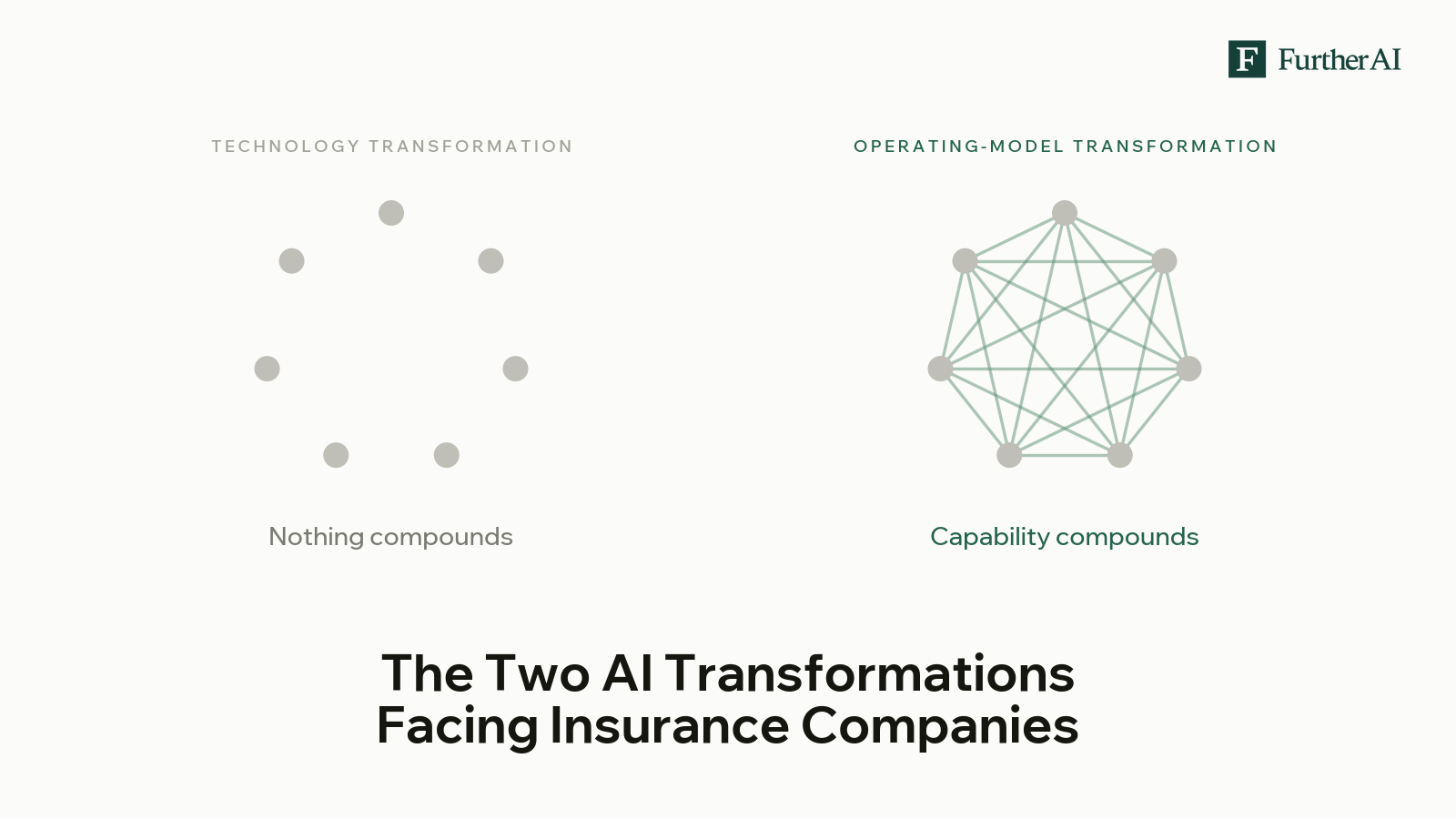
It's the right question. Doing something in 3 months instead of 12 requires not just better technology but a different operating model. Business teams are setting requirements and baselines being established before the first line of code is written. And, critically, there's no tolerance for failure once the work starts.
The leaders in the room didn't pretend this part was easy. The ones moving fastest are the ones who've made transformation a board-level conversation, not an IT line item.
Data is opportunity and risk in equal measure
Several attendees came back to the same point from different angles. Data is the biggest opportunity in front of this industry. It's also the biggest risk. Getting governance right, especially in a regulated environment, is what separates the carriers who will compound their advantage from the ones who will spend the next decade cleaning up.
This is why we built FurtherAI the way we did. Audit trails, human-in-the-loop, and customer-specific context graphs are the price of entry. They're also the foundation that lets the rest of the work scale.
Why I'm optimistic
Insurance has always carried the weight of every other industry's risk. It is the backbone of the global economy, and the people who run it are some of the sharpest operators I've ever met.
And I am convinced that the next decade belongs to them. Not to the technology vendors or the consultants, but to the carriers, MGAs, and brokers who use the new tools to free their teams to do the work that actually matters: assessing risk, building relationships, and serving customers.
That's the industry FurtherAI was built to serve, and dinners like this one are a perfect reminder of why.
A huge thank you to the entire Insurance Insider team for putting this together. And thank you to every leader who came, sat at the table, and spoke plainly. The caliber of the conversation set a high bar for the next one, and there is surely more to come.
Recent posts


Ready to go further and
transform your insurance ops?
Reclaim your time for strategic work and let our AI Assistant handle the busywork. Schedule a demo to see how you can achieve more, faster.




.svg)