FurtherAI Available in Microsoft Marketplace
Introducing Connectors



Build vs. Buy Is Only Half the Decision: A Conversation with Adam Landau at Berkshire Hathaway GUARD

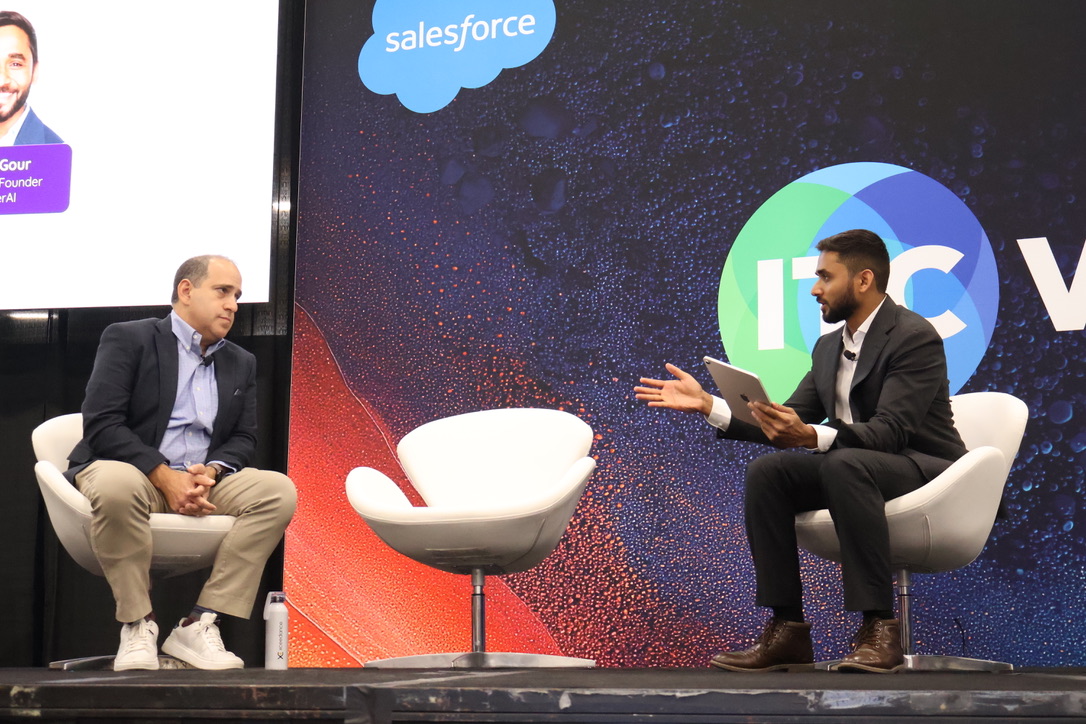
Build vs. Buy Is Only Half the Decision: A Conversation with Adam Landau at Berkshire Hathaway GUARD
At ITC Vegas, our co-founder and CEO Aman Gour sat down with Adam Landau, CIO of Berkshire Hathaway GUARD, to talk through a question every insurance boardroom is debating: build or buy?
Adam's position is that most carriers have already moved into a hybrid of both. Build-versus-buy treats building as ownership and buying as giving up control. The more important question underneath that dilemma is what the carrier needs to own, regardless of who builds the technology.
Ownership is the question underneath build vs. buy
Ownership breaks into two parts. The first is cost, redefined. Total cost of ownership used to be a dollar figure. Today, Adam argues, it should also include speed to market and the carrier's ability to make changes. "Don't just look at it as a dollar," he said. "Some of the softer stuff matters."
The second is where the carrier draws a hard line. At GUARD, that line gets enforced through contract structure. Every agreement is written so the carrier owns the data and the output, no matter which vendor supplies the model or the SaaS layer underneath.
What belongs to the carrier regardless of who builds
Four things, from Adam's perspective, belong to the carrier.
Customer and underwriting data. GUARD will not buy customer data, and anything built around underwriting is built in-house.
Workflows and processes. "Every insurance company has their own little secret sauce," Adam said. The specific processes a carrier has refined over time are IP, and they belong with the carrier.
The prompts underwriters write against the data. Prompting divides in two. The vendor's system prompts, which encode the vendor's expertise in a given workflow, are what GUARD buys. The prompts GUARD's own underwriters and CSRs write against their data belong to GUARD.
The output and the right to use it. When a vendor's model produces an output, GUARD retains the right to take it into other processes, other models, and other SaaS tools. One vendor supplies one leg of the workflow; the carrier controls what happens around it.
Everything else is on the table. GUARD built its own fax capability a decade ago and now buys e-signature instead. Non-core functionality moves from built to bought over time.
How to use partners without giving up ownership
Ownership also doubles as risk management. The AI market is new enough that vendors fail and disappear with some regularity, and a carrier that owns its data has far fewer places where that hurts. When the conversation turned to how GUARD manages that reality, Adam described three habits.
First, GUARD doesn't chase every pitch coming through the door, favoring vendors that have moved past the earliest stage and found reception in the market. Second, GUARD builds backup processes for critical flows, either alternate vendors or manual fallbacks. Third, and most important, GUARD owns all the data and sits as the only party in the process. If a vendor loses its business, the operation isn't threatened.
That ownership architecture is what makes buying safe. Partners accelerate the work; the carrier keeps the intelligence that compounds.
If you want to talk about where the own-vs-source line should sit inside your own operation, get in touch.
Recent posts
Ready to go further and
transform your insurance ops?
Reclaim your time for strategic work and let our AI Assistant handle the busywork. Schedule a demo to see how you can achieve more, faster.




.svg)